The short answer
Updated September 2026
New construction wins when you want a blank slate, a builder warranty and the newest floor plan and mechanicals, and you can wait for the keys. Resale wins when you want an established neighborhood, mature landscaping and to see exactly what you are paying for. In Gwinnett both are strong options, and the tie-breaker is usually your timeline and your tolerance for unknowns, not a verdict that one is better.
The county builds at a steady clip across the east and north side, so new communities and solid resale neighborhoods sit within minutes of each other. That makes the choice a real one, and the checklist below is the one I walk buyers through.
The core trade-off: blank slate vs settled street
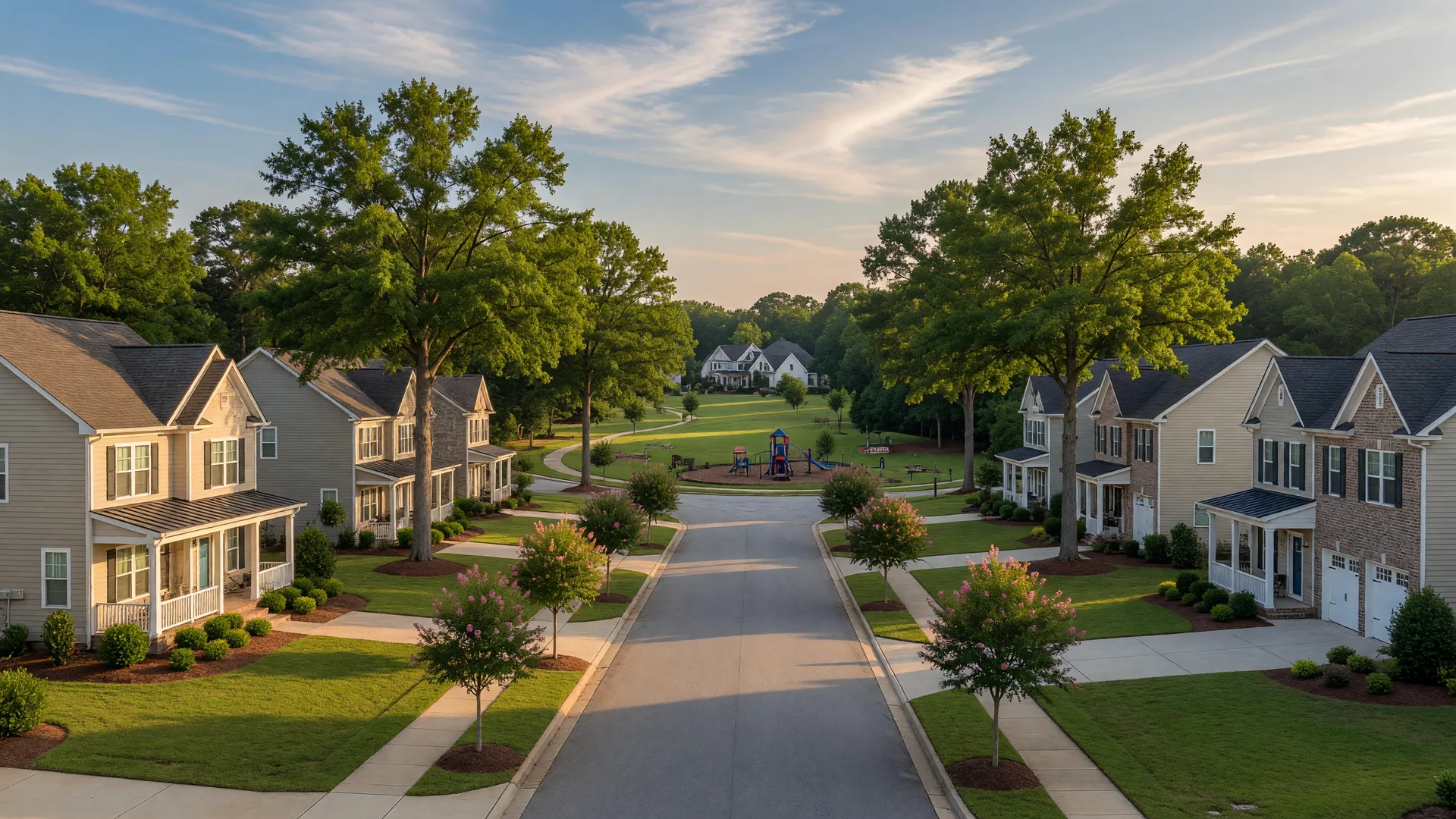
A new build is the cleanest version of a home you will ever buy: nothing worn, nothing dated, everything under warranty, and finish choices you make yourself. The trade-offs are the ones the brochure does not advertise: the yard is bare dirt and young sod, the neighborhood is a construction site for a while, and the tree in the render will take a decade to arrive.
A resale hands you the finished picture: mature trees, established landscaping, a street that already looks lived in, and a track record you can check. What you inherit in return is maintenance and date code: the roof, the HVAC, the kitchen and the water heater all have ages, and your inspection will tell you which ones are close to done.
Neither is wrong. They are two different purchases wearing the same price tag.
Price-per-square-foot realities
Typical numbers, area-dependent and changing month to month: new construction in Gwinnett generally lists at a higher price per square foot than comparable resale, because the builder's number includes the newness and the base price is rarely the final price once you add the upgrades you actually want. A resale with slightly older finishes often delivers more finished square footage for the same total price.
The way to compare honestly is to price the resale as if it were new: what would the updated kitchen, the new roof or the refreshed bath cost you, and does the price gap between the two homes cover it? That is the only math that tells you which one is actually cheaper.
Timeline: the new-build wait vs quick move-in
Resale is measured in weeks: from accepted offer to closing on a financed purchase typically runs 30 to 45 days, and you move into a house that is ready today. For buyers on a lease deadline, a school calendar or a job start date, that speed is often the decisive argument.
New construction is measured in months. A to-be-built home from contract to closing can run from about six months to a year or more depending on the builder and the phase, while spec homes already under construction move faster. If you have decided to buy new, the move-in date is a bigger planning question than the price, so settle it before you fall in love with a floor plan.
Negotiation dynamics: builders' incentives vs resale concessions
Builders price for the long game: the base price is fixed to protect the values of the phases already sold, so the room usually shows up in incentives rather than discounts: interest-rate buydowns, closing-cost contributions, design credits and appliance packages. These are offer-specific and change with the builder's inventory and the season, so the current incentive sheet matters more than last quarter's.
Resale sellers negotiate the same way individuals do: there is room on price, repairs, closing costs and timing, and it tends to be granular. In today's more balanced Gwinnett market, with more inventory and homes taking longer than they did a few years ago, buyers on resales routinely get meaningful concessions. Both paths are negotiable, they just negotiate different things.
Schools and location
New developments often land in the newer corners of the county's growing clusters, sometimes feeding schools that are new or still filling, and attendance boundaries can shift as neighborhoods build out. That is not a reason to avoid them, it is a reason to verify the assignment at the moment you buy and to know it can change.
Established zones like the Mill Creek cluster around Hamilton Mill, the Dacula cluster, or the districts around Suwanee and Lawrenceville carry track records and stable boundaries. For buyers who want the school question settled before the offer, resale in a proven zone is the lower-information-risk path.
The hidden costs on both sides
New construction comes with a line of costs buyers forget: lot premiums, upgrades out of base price, landscaping and irrigation, fencing, window treatments, appliances beyond the package and the higher assessed value that shows up in the first property tax bill. Build it honestly and the gap between base price and total cost is frequently five figures.
Resale carries the deferred-maintenance line instead: the age of the roof and HVAC, the kitchen that works but shows its years, the trees that drop limbs and the systems that keep a schedule of their own. A good inspection and a home warranty can soften it, but the maintenance calendar is real from month one.
A quick decision table
| Factor | New construction | Resale |
|---|---|---|
| Price per square foot | Typically higher once upgrades are added | Typically lower; more finished footage for the same total |
| Move-in timeline | Roughly 6 to 12 months for to-be-built | Roughly 30 to 45 days to close |
| Condition | New, under warranty, nothing dated | Lived-in; age of roof and systems unknown until inspection |
| Negotiation room | Incentives: rate buydowns, closing help, upgrades | Price, repairs, closing costs and timing |
| Schools | Newer clusters; boundaries can shift as areas build | Proven zones with track records |
| Hidden costs | Upgrades, landscaping, blinds, higher first tax bill | Deferred maintenance and system replacement |
Which should you buy?
Buy new if you want the cleanest possible condition, a warranty, a floor plan nobody has lived in, and the ability to wait out the build. Buy resale if you want the established street, the mature trees, the settled school zone, and a move-in date measured in weeks instead of months.
And if you are honestly split, the number that usually settles it is the all-in comparison: total cost of the new home with upgrades and landscaping, versus total cost of the resale plus the updates it needs. That is the math worth doing before the tours, and it is the one most buyers skip.
What I see in Gwinnett is buyers choosing new construction for the emotional clean slate and resale for the practical settled street, and both groups being right. The failures happen when the buyer is shocked by the all-in new-build cost, or the resale timeline, after the contract is signed, not before.
Do the all-in math on both sides before touring: upgrade list on new, update list on resale. Send me the budget and the date you need the keys, and I will pull the shortlist that matches the deadline.
Build your compare list
If new construction and resale are both on your list, the fastest way through is to see the real all-in numbers side by side. Send the budget and the move-in date, and we will pull the homes that actually match.
Figures in this post are typical ranges and timelines, approximate and dependent on the specific builder, neighborhood, market and loan, not guarantees. School boundaries are verified by address. Confirm everything against the exact property before you make an offer.
Rob Dietrich | eXp Realty
Georgia REALTOR® | License #384162

Written by
Rob Dietrich
Georgia REALTOR® with eXp Realty, AI Certified Real Estate Strategist, serving Gwinnett, Hall, Barrow and Jackson counties.
Read the full profile